
Phishing & Social Engineering: Concepts, Techniques, and Prevention
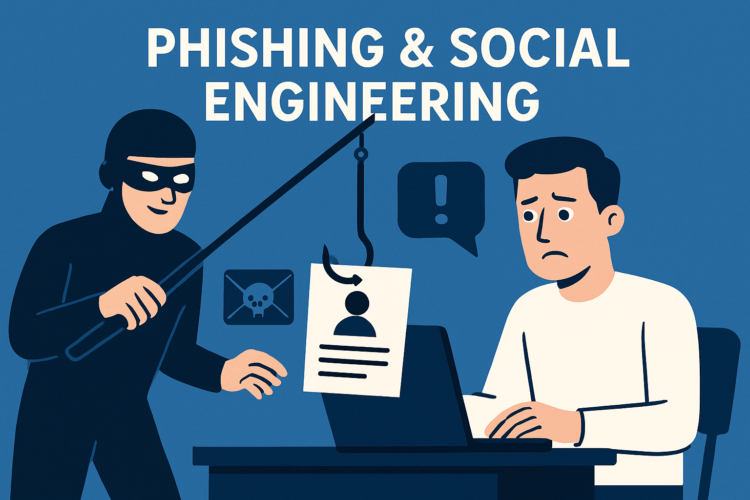
Phishing & Social Engineering
Phishing is a cybercrime where attackers impersonate trusted entities—such as banks, companies, or government organizations—to steal sensitive information like usernames, passwords, credit card numbers, or OTPs.
Attackers usually use emails, messages, or fake websites that look legitimate to deceive victims.
Common Types of Phishing Attacks:
| Type of Phishing Attack | Description |
|---|---|
| Email Phishing | Fraudulent emails designed to appear as official communication from trusted sources, often containing malicious links or attachments. |
| Spear Phishing | A targeted phishing attack aimed at a specific individual or organization, using personal or organizational details to appear convincing. |
| Whaling | A form of spear phishing that targets senior executives, CEOs, or high-level officials, often involving fake legal notices or financial requests. |
| Smishing | Phishing attacks carried out through SMS or messaging apps, typically containing fake alerts or malicious links. |
| Vishing | Voice-based phishing where attackers impersonate bank officials, customer support, or authorities to extract sensitive information. |
What Is Social Engineering?
Social engineering is a manipulation technique that exploits human emotions such as trust, fear, urgency, or curiosity to influence people into compromising security.
Unlike hacking software systems, social engineering targets people directly.
Common Social Engineering Techniques:
How Phishing and Social Engineering Attacks Work?
-
The attacker identifies a target
-
A deceptive message or scenario is created
-
Trust or urgency is established
-
The victim unknowingly shares sensitive information
-
The attacker exploits the data for fraud or unauthorized access
Signs of Phishing and Social Engineering Attempts
-
Urgent or threatening language
-
Unusual sender email addresses or phone numbers
-
Requests for passwords, OTPs, or personal information
-
Suspicious links or attachments
-
Poor grammar or spelling errors
-
Unexpected rewards or offers
Impact of Phishing & Social Engineering Attacks
Phishing and social engineering attacks can have severe consequences for both individuals and organizations. One of the most common impacts is financial loss, where attackers steal banking credentials and carry out unauthorized transactions. These attacks can also lead to data breaches, resulting in the exposure of personal, corporate, or confidential information. Victims may suffer from identity theft, where stolen personal details are misused for illegal activities.
Additionally, such attacks can cause significant reputation damage, leading to loss of trust and credibility for individuals and organizations. There are also serious legal and compliance risks, as failure to protect sensitive data can result in penalties, fines, and lawsuits.
Prevention and Best Practices
Preventing phishing and social engineering attacks requires awareness and proactive security measures. Individuals should never click on unknown or suspicious links, always verify the sender’s identity before responding, and avoid sharing sensitive information through email or phone calls. Using strong and unique passwords for different accounts and enabling multi-factor authentication significantly improves security.
Organizations should conduct regular cybersecurity awareness training for employees, implement robust email filtering and spam detection systems, and enforce least-privilege access controls. Monitoring and auditing suspicious activities, along with establishing clear security policies and incident response plans, are also essential to reducing risks.
📞 Call Us Today: 7000-12-7225
📧 Email Us: prospectlegalbpl@gmail.com
What to Do If You Fall Victim to Phishing?
If you fall victim to a phishing or social engineering attack, immediate action is crucial. Change all compromised passwords as soon as possible and notify your bank or service provider to prevent further damage. The incident should be reported to your IT department or relevant cybersecurity authorities. It is also important to scan your device for malware and continuously monitor your accounts for any unusual or suspicious activity to minimize potential losses.
Frequently Asked Questions (FAQ)
1. What is phishing?
Phishing is a cyberattack where criminals impersonate trusted individuals or organizations to trick users into revealing sensitive information such as passwords, banking details, or OTPs.
2. What is social engineering?
Social engineering is a manipulation technique that exploits human trust, emotions, or behavior to gain unauthorized access to information or systems.
3. How can I identify a phishing message?
Phishing messages often create urgency, contain suspicious links or attachments, use unfamiliar sender addresses, and request confidential information unexpectedly.
4. What should I do if I receive a phishing email or message?
Do not click on any links or attachments. Verify the sender through official channels, report the message to your IT team or service provider, and delete it immediately.
5. How can organizations protect themselves from phishing and social engineering attacks?
Organizations can protect themselves by conducting regular security awareness training, implementing email filtering systems, enforcing strong access controls, and maintaining clear security policies.
📩 Raise an Enquiry

Why Choose Prospect Legal Private Limited?
✔ Experienced Legal Team – Specialized in NGO related problems and streamlined process.
✔ End-to-End Assistance – From documentation to legal representation.
✔ Fast & Hassle-Free Process – Avoid unnecessary delays in your process.
✔ Affordable & Transparent Fees – No hidden charges, cost-effective solutions.
✔ Dedicated Support – Regular updates and expert legal guidance.
Contact Us
Address: R-52, First Floor, Zone 1, M.P. Nagar, Near Hotel Shree Vatika, Bhopal – 462011 (M.P.)
Call: 7000-12-7225
Email ID: prospectlegalbpl@gmail.com
Website: www.prospectlegal.co.in